 Haiti
Haiti
Other resources (non-core)
Country Indexes
UN Women in action: Strategic insights and achievements
View annual report narratives for the year
Advancing SDGs: UN Women's impact and key achievements
A Transformative Shift for Women in Grand’Anse: The Triple Dividends of Empowerment
In Grand’Anse, a significant transformation is taking place, demonstrating how investing in women drives economic, health, and environmental progress. Through a Norway?funded initiative in the Great South, UN Women and UNAIDS strengthened the economic resilience of 60 women formerly engaged in sex work by supporting cassava processing. The result is a compelling example of the triple dividend of women’s empowerment.
The project delivered immediate gains. Fifty?four women increased their income, enabling more stable livelihoods and consistent access to essential health services. This economic boost supported better adherence to HIV treatment and earlier health?seeking behaviors—critical for women facing multiple vulnerabilities. These achievements came through collaboration among UN Women, UNAIDS, the Ministry of Agriculture, the Ministry of Women’s Affairs, and a strong women?led community organization.
As incomes rose, households experienced improved nutrition, expanded access to clean water and sanitation, and safer working conditions thanks to modern cassava?processing equipment. Daily labor became less hazardous, strengthening women’s capacity to sustain their livelihoods.
Financial resilience also grew. With higher earnings, women began saving, joining solidarity groups, and seeking early medical care—preventing costly emergencies that reduced stress, improved productivity, and enhanced family wellbeing, underscoring the link between economic empowerment and better health outcomes.
Environmental benefits followed. More efficient cassava processing reduced firewood use, lowered soil and water contamination, and encouraged agroecological practices—supporting the One Health approach and building resilience to climate risks.
For women living with HIV engaged in sex work, the initiative helped break stigma linked to gender, livelihood, and HIV status. Equipped with new skills and steady income, they emerged as entrepreneurs, community leaders, and advocates for their rights, contributing to SDG 3, 5, 6, 8, and 13.
With the Ministry of Agriculture designating 2025 as the Year of Cassava and while internal displacement rising across the south, cassava has become essential for food security and income. During our Nexus discussions with UNAIDS, the women’s association proved to be a key structure for reaching the most vulnerable.
A women’s committee formed through the project is now engaging the Ministry of Health, advocating for HIV resources to support economic empowerment. Their leadership reflects both individual transformation and a broader shift toward systems that recognize economic empowerment as foundational to sustainable development.
When women thrive, communities prosper—economically, socially, and environmentally. The impact of this investment continues to grow, paving the way for a more resilient and equitable future.
In Grand’Anse, a significant transformation is taking place, demonstrating how investing in women drives economic, health, and environmental progress. Through a Norway?funded initiative in the Great South, UN Women and UNAIDS strengthened the economic resilience of 60 women formerly engaged in sex work by supporting cassava processing. The result is a compelling example of the triple dividend of women’s empowerment.
The project delivered immediate gains. Fifty?four women increased their income, enabling more stable livelihoods and consistent access to essential health services. This economic boost supported better adherence to HIV treatment and earlier health?seeking behaviors—critical for women facing multiple vulnerabilities. These achievements came through collaboration among UN Women, UNAIDS, the Ministry of Agriculture, the Ministry of Women’s Affairs, and a strong women?led community organization.
As incomes rose, households experienced improved nutrition, expanded access to clean water and sanitation, and safer working conditions thanks to modern cassava?processing equipment. Daily labor became less hazardous, strengthening women’s capacity to sustain their livelihoods.
Financial resilience also grew. With higher earnings, women began saving, joining solidarity groups, and seeking early medical care—preventing costly emergencies that reduced stress, improved productivity, and enhanced family wellbeing, underscoring the link between economic empowerment and better health outcomes.
Environmental benefits followed. More efficient cassava processing reduced firewood use, lowered soil and water contamination, and encouraged agroecological practices—supporting the One Health approach and building resilience to climate risks.
For women living with HIV engaged in sex work, the initiative helped break stigma linked to gender, livelihood, and HIV status. Equipped with new skills and steady income, they emerged as entrepreneurs, community leaders, and advocates for their rights, contributing to SDG 3, 5, 6, 8, and 13.
With the Ministry of Agriculture designating 2025 as the Year of Cassava and while internal displacement rising across the south, cassava has become essential for food security and income. During our Nexus discussions with UNAIDS, the women’s association proved to be a key structure for reaching the most vulnerable.
A women’s committee formed through the project is now engaging the Ministry of Health, advocating for HIV resources to support economic empowerment. Their leadership reflects both individual transformation and a broader shift toward systems that recognize economic empowerment as foundational to sustainable development.
When women thrive, communities prosper—economically, socially, and environmentally. The impact of this investment continues to grow, paving the way for a more resilient and equitable future.
Advancing SDGs: UN Women's impact and key achievements
Mental Health support as A Vehicle for Women's Resilience to face Crisis in Haiti
With the support of PBF and the WPHF, populations affected by violence in Haiti, particularly girls and women,
have received psychosocial support services to navigate the ongoing crisis in the country. Among the results
obtained, there has been the technical and institutional strengthening of 4 CSOs partner, 7 CBOs, and 4 mental
health care structures in the commune of Cité Soleil, which has been a favored ground for gangs since 2022.
This has allowed them to offer adequate, quality and effective psychosocial care to more than 2637 survivors of
violence, as of November 2024. Awareness-raising and training have promoted active, dedicated women
capable of making their voices heard while promoting their development, knowledge of their rights, and
informed involvement in decision-making in their respective community.
Self-esteem, resilience, and young girls capacities built through the provision of psychosocial support services,
social leadership training, and the implementation of inclusive peace consolidation initiatives.
Faced with mobility difficulties, the development and dissemination of mobile applications and alert systems,
respectively ALO TOYA and KONEKTEM(available on Playstore and Appstore), were deemed necessary by
two national partner organizations to facilitate remote care for survivors who could not travel to access in-person
care due to insecurity or physical limitations.
A large audience of women and girls (more than 330) benefited in a very confidential and secure manner by
establishing discussion spaces, interactive dialogue, and peer learning between young people, men, and women
in communities reaching more than 1700 people. in collaboration with government entities like Office de
protection des Citoyens and the Ministry of Health, consultation and synergy developed with civil society
institutions (CONCERN, TOYA, Fondation Essences_Elles, Rapha House), involvement of community leaders and notables in violence fight and provide necessary support to victims has been a strategy to make durable actions even after the implementation period.
The governement through the Health Ministry has developped a standardized national protocol for the psychosocial care of survivors of violence against women and girls (VAWG) to provide guidelines to mental health professional service providers (judicial, police, health, social, and educational fields) to improve the response in supporting survivors with comprehensive assistance and adequate protection, to avoid secondary victimization. This protocol is part of the 2017-2027 national plan developed by the Ministry of Health together with the Ministry of gender. The initiative and tangible results obtained constitute an important contribution to the 3rd Sustainable Development Goal (SDG) - Good Health and Well-being, which aims to ensure healthy lives and promote well-being for all ages.
With the support of PBF and the WPHF, populations affected by violence in Haiti, particularly girls and women,
have received psychosocial support services to navigate the ongoing crisis in the country. Among the results
obtained, there has been the technical and institutional strengthening of 4 CSOs partner, 7 CBOs, and 4 mental
health care structures in the commune of Cité Soleil, which has been a favored ground for gangs since 2022.
This has allowed them to offer adequate, quality and effective psychosocial care to more than 2637 survivors of
violence, as of November 2024. Awareness-raising and training have promoted active, dedicated women
capable of making their voices heard while promoting their development, knowledge of their rights, and
informed involvement in decision-making in their respective community.
Self-esteem, resilience, and young girls capacities built through the provision of psychosocial support services,
social leadership training, and the implementation of inclusive peace consolidation initiatives.
Faced with mobility difficulties, the development and dissemination of mobile applications and alert systems,
respectively ALO TOYA and KONEKTEM(available on Playstore and Appstore), were deemed necessary by
two national partner organizations to facilitate remote care for survivors who could not travel to access in-person
care due to insecurity or physical limitations.
A large audience of women and girls (more than 330) benefited in a very confidential and secure manner by
establishing discussion spaces, interactive dialogue, and peer learning between young people, men, and women
in communities reaching more than 1700 people. in collaboration with government entities like Office de
protection des Citoyens and the Ministry of Health, consultation and synergy developed with civil society
institutions (CONCERN, TOYA, Fondation Essences_Elles, Rapha House), involvement of community leaders and notables in violence fight and provide necessary support to victims has been a strategy to make durable actions even after the implementation period.
The governement through the Health Ministry has developped a standardized national protocol for the psychosocial care of survivors of violence against women and girls (VAWG) to provide guidelines to mental health professional service providers (judicial, police, health, social, and educational fields) to improve the response in supporting survivors with comprehensive assistance and adequate protection, to avoid secondary victimization. This protocol is part of the 2017-2027 national plan developed by the Ministry of Health together with the Ministry of gender. The initiative and tangible results obtained constitute an important contribution to the 3rd Sustainable Development Goal (SDG) - Good Health and Well-being, which aims to ensure healthy lives and promote well-being for all ages.
Advancing SDGs: UN Women's impact and key achievements
Within the scope of SPOTLIGHT Programme, UN Women Haiti contributed to the Sustainable Development Goals, including SDG 3, SDG 5, SDG 16, and Gender Accelerator 6, UNSDCF outcome 3, tackling VAW issues through joint programming and consolidation of local partnerships.
VAWG services providers increased their services coverage for survivors and expanded the access of 244 VAWG survivors and their minor children in gang affected areas of Port-au-Prince (Cité Soleil, Tabarre, Croix-des Bouquets, Mariani, Bel-Air, Solino, Carrefour-Feuilles, Delmas). This included access to temporary shelter for women survivors, young mothers and survivors with their dependents. It also included medical referrals, psychosocial support, and income-generating financial support kits. It also allowed them to provide a new type of service by funding relocation costs for VAWG survivors to exit unsafe homes, neighborhoods affected by gang violence or IDP camps in the most vulnerable areas of Port-au-Prince. The overall offer of shelter structures and beds in the capital to cope with the increasing demand by contributing to the construction of a new shelter in Croix-des-Bouquets, rehabilitation of 3 community structures in these zones, creation of 50 Women and Girls Safe Spaces in vulnerable communities of the capital, the South, North-east and Grand’Anse departments that provided mentoring and training on HIV/AIDS and VAWG prevention to 4,674 women and girls, through the SASA! approach.
All GBV police units throughout the country were equipped to increase their operational performance in processing VAWG cases and producing data, and to provide them with field deployment capabilities to reach survivors. The Sexual Crimes Unit of the Police and the police Child Protection Brigade were also equipped. This equipment will come into operation in 2024 and will be monitored to observe and measure changes in performance in responding to VAWG.
Spotlight contributed to a change of social norms and knowledge of key community opinion-shapers, particularly school teachers who had a measured average increase of 19.09% in their knowledge about gender equality, gender stereotypes, VAWG, available VAWG services and school violence post-trainings. Youth movement organizations and women organizations intervening in neighborhoods affected by gang violence in Port-au-Prince and in the Department of Grand'Anse also had a measured average increase in their skills and knowledge in the development, budgeting and monitoring plans that integrate VAWG, including project development and management.
Spotlight has also provided an important basis to improve the coordination, implementation and M&E of the National VAW Action Plan with the development of a draft results framework which was heretofore absent from this critical public policy. It also left a proposal of a National standardized Protocol on Psychosocial Services for VAWG Survivors, which aims to set the minimum standards and quality guidelines.
VAWG services providers increased their services coverage for survivors and expanded the access of 244 VAWG survivors and their minor children in gang affected areas of Port-au-Prince (Cité Soleil, Tabarre, Croix-des Bouquets, Mariani, Bel-Air, Solino, Carrefour-Feuilles, Delmas). This included access to temporary shelter for women survivors, young mothers and survivors with their dependents. It also included medical referrals, psychosocial support, and income-generating financial support kits. It also allowed them to provide a new type of service by funding relocation costs for VAWG survivors to exit unsafe homes, neighborhoods affected by gang violence or IDP camps in the most vulnerable areas of Port-au-Prince. The overall offer of shelter structures and beds in the capital to cope with the increasing demand by contributing to the construction of a new shelter in Croix-des-Bouquets, rehabilitation of 3 community structures in these zones, creation of 50 Women and Girls Safe Spaces in vulnerable communities of the capital, the South, North-east and Grand’Anse departments that provided mentoring and training on HIV/AIDS and VAWG prevention to 4,674 women and girls, through the SASA! approach.
All GBV police units throughout the country were equipped to increase their operational performance in processing VAWG cases and producing data, and to provide them with field deployment capabilities to reach survivors. The Sexual Crimes Unit of the Police and the police Child Protection Brigade were also equipped. This equipment will come into operation in 2024 and will be monitored to observe and measure changes in performance in responding to VAWG.
Spotlight contributed to a change of social norms and knowledge of key community opinion-shapers, particularly school teachers who had a measured average increase of 19.09% in their knowledge about gender equality, gender stereotypes, VAWG, available VAWG services and school violence post-trainings. Youth movement organizations and women organizations intervening in neighborhoods affected by gang violence in Port-au-Prince and in the Department of Grand'Anse also had a measured average increase in their skills and knowledge in the development, budgeting and monitoring plans that integrate VAWG, including project development and management.
Spotlight has also provided an important basis to improve the coordination, implementation and M&E of the National VAW Action Plan with the development of a draft results framework which was heretofore absent from this critical public policy. It also left a proposal of a National standardized Protocol on Psychosocial Services for VAWG Survivors, which aims to set the minimum standards and quality guidelines.
Advancing SDGs: UN Women's impact and key achievements
Women have come together as one voice in an Alliance of 11 platforms and networks bringing together 791 women organisations with a total number of 249 000 members distributed in the 10 departments of Haiti with the main aim of promoting women political participation and leadership and preventing gender based violence during electoral processes. A joint and comprehensive strategic plan and other relevant governance, institutionnal development and management tools have allowed women to already engage in policy dialogue and advocacy for peace and security as well as women's leadership and political participation. 9 measures were outlined to call upon political actors for peace and security, which is a UNW CO contribution to SDG5, 10 and 16.
UN women new membership withing the IASC has reinforced the CO role in the newly established gender network of actors in humanitarian action(REGAH) that provided tools, analyisis and guidance to humanitarian community for a gendered and more inclusive response.
In it's capacity of gender thematic lead , UN Women was able to engender the new UNDCF (2023-2027) still under development with a clear theory of change, Outcomes and Outputs as well as their relating indicators. CO has ensured the report on gender SWAP and 2023 action plan were provided for the accountability framework with evidence on key performance indicators and shared with UNCT Heads of Agencies.
Alliances with men were built through establishment of the 1st HeForShe Club in Port Au Prince, targetting staff, teachers and students at université Quisqueya, in partership with UNESCO and UNAIDS and teaming up with 6 CSOs who will follow up on engagement. A protocol on men and young men engagement in HeForShe campaign was developped and signed and/or posted by some targetted universities. Young men inspired their peers with new intiatives in secondary schools to raise awareness against HIV stigma and violence on women and girls;
A very first two day show-case on positive masculinity was launched by the Observatoire de la Jeunesse Haitienne during the 16 days of activism. The campaign brought in the marginalised young boys and girls from Cité Soleil, a Gangs' fiefs in PAP that has been severely affected by armed gangs violence in 2022.
Using our IB/Core programmable budget, a UN women field visit showcased evidences which convinced the government of Norway for additional support to women farmers through a 3 year project FADEKA II to be soon launched.
UN women new membership withing the IASC has reinforced the CO role in the newly established gender network of actors in humanitarian action(REGAH) that provided tools, analyisis and guidance to humanitarian community for a gendered and more inclusive response.
In it's capacity of gender thematic lead , UN Women was able to engender the new UNDCF (2023-2027) still under development with a clear theory of change, Outcomes and Outputs as well as their relating indicators. CO has ensured the report on gender SWAP and 2023 action plan were provided for the accountability framework with evidence on key performance indicators and shared with UNCT Heads of Agencies.
Alliances with men were built through establishment of the 1st HeForShe Club in Port Au Prince, targetting staff, teachers and students at université Quisqueya, in partership with UNESCO and UNAIDS and teaming up with 6 CSOs who will follow up on engagement. A protocol on men and young men engagement in HeForShe campaign was developped and signed and/or posted by some targetted universities. Young men inspired their peers with new intiatives in secondary schools to raise awareness against HIV stigma and violence on women and girls;
A very first two day show-case on positive masculinity was launched by the Observatoire de la Jeunesse Haitienne during the 16 days of activism. The campaign brought in the marginalised young boys and girls from Cité Soleil, a Gangs' fiefs in PAP that has been severely affected by armed gangs violence in 2022.
Using our IB/Core programmable budget, a UN women field visit showcased evidences which convinced the government of Norway for additional support to women farmers through a 3 year project FADEKA II to be soon launched.
Results and resources
- Results overview
- Total resources
- Development results and resources
- Organizational results and resources
Budget
Expenses
Outcome
Result statement
IATI identifier
Budget
Expenses
Outcome
Result statement
IATI identifier
OutcomeHTI_O_1
Outcome result statementArea 1. Principled performance: focusing on keeping UN Women a responsible and trustworthy development organization that manages its financial and other resources with integrity, which is consistent with its programmatic ambitions and fiduciary obligations.
IATI identifierXM-DAC-41146-HTI_O_1
OutcomeHTI_O_2
Outcome result statementAdvancing partnerships: whose purpose is that PALCO effectively leverages and expands its partnerships, communications, and advocacy capacities to increase support and funding for gender equality in the fulfilment of its triple mandate.
IATI identifierXM-DAC-41146-HTI_O_2
OutcomeHTI_O_3
Outcome result statementBusiness transformation: aimed at promoting the transformation of the organization and its business model to generate impact at scale, rooted in a culture of continuous improvement.
IATI identifierXM-DAC-41146-HTI_O_3
OutcomeHTI_O_4
Outcome result statementEmpowered people: to foster an empowered workforce and promote an inclusive organizational culture.
IATI identifierXM-DAC-41146-HTI_O_4
OutcomeHTI_O_5
Outcome result statementProducts services and processes: whose horizon is a CO that efficiently and effectively fulfills all institutional processes that promote the integrated execution of its normative, programmatic, and coordination mandate.
IATI identifierXM-DAC-41146-HTI_O_5
Resources allocated towards SDGs
View SDG data for
Our funding partners contributions
- Chart
- Tabla
Regular resources (core)
$348.92 K in total
Lorem Ipsum is simply dummy text of the printing and typesetting industry.
Other resources (non-core)
$11.01 M in total
Regular resources (core)
$348.92 K in total
Lorem Ipsum is simply dummy text of the printing and typesetting industry.
| 2022 | 2021 | 2020 | 2019 | 2018 | |
|---|---|---|---|---|---|
| United Nations Entity for Gender Equality and the Empowerment of Women (UN Women) | $53,049 2022
United Nations Entity for Gender Equality and the Empowerment of Women (UN Women)
Total contribution:$53,049
Development:$53,049(100%)
Humanitarian:$0(0%)
|
$155,071 2021
United Nations Entity for Gender Equality and the Empowerment of Women (UN Women)
Total contribution:$155,071
Development:$155,071(100%)
Humanitarian:$0(0%)
|
$78,369 2020
United Nations Entity for Gender Equality and the Empowerment of Women (UN Women)
Total contribution:$78,369
Development:$78,369(100%)
Humanitarian:$0(0%)
|
$10,649 2019
United Nations Entity for Gender Equality and the Empowerment of Women (UN Women)
Total contribution:$10,649
Development:$10,649(100%)
Humanitarian:$0(0%)
|
$51,778 2018
United Nations Entity for Gender Equality and the Empowerment of Women (UN Women)
Total contribution:$51,778
Development:$51,778(100%)
Humanitarian:$0(0%)
|
2022
United Nations Entity for Gender Equality and the Empowerment of Women (UN Women)$53,049
Total contribution$53,049
Development$53,049(100%)
Humanitarian$0(0%)
2021
United Nations Entity for Gender Equality and the Empowerment of Women (UN Women)$155,071
Total contribution$155,071
Development$155,071(100%)
Humanitarian$0(0%)
2020
United Nations Entity for Gender Equality and the Empowerment of Women (UN Women)$78,369
Total contribution$78,369
Development$78,369(100%)
Humanitarian$0(0%)
2019
United Nations Entity for Gender Equality and the Empowerment of Women (UN Women)$10,649
Total contribution$10,649
Development$10,649(100%)
Humanitarian$0(0%)
2018
United Nations Entity for Gender Equality and the Empowerment of Women (UN Women)$51,778
Total contribution$51,778
Development$51,778(100%)
Humanitarian$0(0%)
Other resources (non-core)
$11.01 M in total
Lorem Ipsum is simply dummy text of the printing and typesetting industry.
| 2022 | 2021 | 2020 | 2019 | 2018 | |
|---|---|---|---|---|---|
| Canada | $147,232 2022
CanadaOECD-DAC donor
Total contribution:$147,232
Development:$147,232(100%)
Humanitarian:$0(0%)
|
$121,812 2021
CanadaOECD-DAC donor
Total contribution:$121,812
Development:$121,812(100%)
Humanitarian:$0(0%)
|
$336,046 2020
CanadaOECD-DAC donor
Total contribution:$336,046
Development:$336,046(100%)
Humanitarian:$0(0%)
|
$332,053 2019
CanadaOECD-DAC donor
Total contribution:$332,053
Development:$332,053(100%)
Humanitarian:$0(0%)
|
$278,025 2018
CanadaOECD-DAC donor
Total contribution:$278,025
Development:$278,025(100%)
Humanitarian:$0(0%)
|
| Norway | $32,117 2022
NorwayOECD-DAC donor
Total contribution:$32,117
Development:$32,117(100%)
Humanitarian:$0(0%)
|
$1,121,166 2021
NorwayOECD-DAC donor
Total contribution:$1,121,166
Development:$1,121,166(100%)
Humanitarian:$0(0%)
|
$976,616 2020
NorwayOECD-DAC donor
Total contribution:$976,616
Development:$976,616(100%)
Humanitarian:$0(0%)
|
$971,145 2019
NorwayOECD-DAC donor
Total contribution:$971,145
Development:$971,145(100%)
Humanitarian:$0(0%)
|
$221,044 2018
NorwayOECD-DAC donor
Total contribution:$221,044
Development:$221,044(100%)
Humanitarian:$0(0%)
|
| United Nations Development Programme (UNDP) | --
2022
No data available
|
--
2021
No data available
|
--
2020
No data available
|
$166,806 2019
United Nations Development Programme (UNDP)United Nations organization
Total contribution:$166,806
Development:$166,806(100%)
Humanitarian:$0(0%)
|
$458,707 2018
United Nations Development Programme (UNDP)United Nations organization
Total contribution:$458,707
Development:$458,707(100%)
Humanitarian:$0(0%)
|
| United Nations Multi-Partner Trust Fund Office | $389,899 2022
United Nations Multi-Partner Trust Fund OfficeUnited Nations pooled fund
Total contribution:$389,899
Development:$389,899(100%)
Humanitarian:$0(0%)
|
$110,299 2021
United Nations Multi-Partner Trust Fund OfficeUnited Nations pooled fund
Total contribution:$110,299
Development:$110,299(100%)
Humanitarian:$0(0%)
|
$269,348 2020
United Nations Multi-Partner Trust Fund OfficeUnited Nations pooled fund
Total contribution:$269,348
Development:$269,348(100%)
Humanitarian:$0(0%)
|
--
2019
No data available
|
$62,300 2018
United Nations Multi-Partner Trust Fund OfficeUnited Nations pooled fund
Total contribution:$62,300
Development:$62,300(100%)
Humanitarian:$0(0%)
|
| United Nations Stabilization Mission in Haiti (MINUSTAH) | --
2022
No data available
|
--
2021
No data available
|
--
2020
No data available
|
$165,029 2019
United Nations Stabilization Mission in Haiti (MINUSTAH)United Nations organization
Total contribution:$165,029
Development:$165,029(100%)
Humanitarian:$0(0%)
|
$70,919 2018
United Nations Stabilization Mission in Haiti (MINUSTAH)United Nations organization
Total contribution:$70,919
Development:$70,919(100%)
Humanitarian:$0(0%)
|
| Joint United Nations Programme on HIV and AIDS (UNAIDS) | $61,158 2022
Joint United Nations Programme on HIV and AIDS (UNAIDS)United Nations organization
Total contribution:$61,158
Development:$61,158(100%)
Humanitarian:$0(0%)
|
$18,483 2021
Joint United Nations Programme on HIV and AIDS (UNAIDS)United Nations organization
Total contribution:$18,483
Development:$18,483(100%)
Humanitarian:$0(0%)
|
$35,017 2020
Joint United Nations Programme on HIV and AIDS (UNAIDS)United Nations organization
Total contribution:$35,017
Development:$35,017(100%)
Humanitarian:$0(0%)
|
$37,037 2019
Joint United Nations Programme on HIV and AIDS (UNAIDS)United Nations organization
Total contribution:$37,037
Development:$37,037(100%)
Humanitarian:$0(0%)
|
--
2018
No data available
|
| European Commission | $23,536 2022
European CommissionOECD-DAC donor
Total contribution:$23,536
Development:$23,536(100%)
Humanitarian:$0(0%)
|
$137,743 2021
European CommissionOECD-DAC donor
Total contribution:$137,743
Development:$137,743(100%)
Humanitarian:$0(0%)
|
$134,202 2020
European CommissionOECD-DAC donor
Total contribution:$134,202
Development:$134,202(100%)
Humanitarian:$0(0%)
|
--
2019
No data available
|
--
2018
No data available
|
| European Commission (Spotlight) | $785,689 2022
European Commission (Spotlight)OECD-DAC donor
Total contribution:$785,689
Development:$785,689(100%)
Humanitarian:$0(0%)
|
$872,069 2021
European Commission (Spotlight)OECD-DAC donor
Total contribution:$872,069
Development:$872,069(100%)
Humanitarian:$0(0%)
|
$1,292,868 2020
European Commission (Spotlight)OECD-DAC donor
Total contribution:$1,292,868
Development:$1,292,868(100%)
Humanitarian:$0(0%)
|
--
2019
No data available
|
--
2018
No data available
|
| International Organization for Migration (IOM) | --
2022
No data available
|
--
2021
No data available
|
$23,250 2020
International Organization for Migration (IOM)United Nations organization
Total contribution:$23,250
Development:$23,250(100%)
Humanitarian:$0(0%)
|
--
2019
No data available
|
--
2018
No data available
|
| Peacebuilding Fund | $746,323 2022
Peacebuilding FundUnited Nations pooled fund
Total contribution:$746,323
Development:$746,323(100%)
Humanitarian:$0(0%)
|
$356,042 2021
Peacebuilding FundUnited Nations pooled fund
Total contribution:$356,042
Development:$356,042(100%)
Humanitarian:$0(0%)
|
$105,920 2020
Peacebuilding FundUnited Nations pooled fund
Total contribution:$105,920
Development:$105,920(100%)
Humanitarian:$0(0%)
|
--
2019
No data available
|
--
2018
No data available
|
| Australian National Committee | $18,966 2022
Australian National CommitteeNational Committee
Total contribution:$18,966
Development:$18,966(100%)
Humanitarian:$0(0%)
|
$3,278 2021
Australian National CommitteeNational Committee
Total contribution:$3,278
Development:$3,278(100%)
Humanitarian:$0(0%)
|
--
2020
No data available
|
--
2019
No data available
|
--
2018
No data available
|
| Austria | $21,237 2022
AustriaOECD-DAC donor
Total contribution:$21,237
Development:$21,237(100%)
Humanitarian:$0(0%)
|
$849 2021
AustriaOECD-DAC donor
Total contribution:$849
Development:$849(100%)
Humanitarian:$0(0%)
|
--
2020
No data available
|
--
2019
No data available
|
--
2018
No data available
|
| Miscellaneous Donors | $806 2022
Miscellaneous DonorsPrivate sector
Total contribution:$806
Development:$806(100%)
Humanitarian:$0(0%)
|
$65 2021
Miscellaneous DonorsPrivate sector
Total contribution:$65
Development:$65(100%)
Humanitarian:$0(0%)
|
--
2020
No data available
|
--
2019
No data available
|
--
2018
No data available
|
| Germany | $92,786 2022
GermanyOECD-DAC donor
Total contribution:$92,786
Development:$92,786(100%)
Humanitarian:$0(0%)
|
--
2021
No data available
|
--
2020
No data available
|
--
2019
No data available
|
--
2018
No data available
|
| Germany National Committee | $5,480 2022
Germany National CommitteeNational Committee
Total contribution:$5,480
Development:$5,480(100%)
Humanitarian:$0(0%)
|
--
2021
No data available
|
--
2020
No data available
|
--
2019
No data available
|
--
2018
No data available
|
| World Food Programme (WFP) | $10,000 2022
World Food Programme (WFP)United Nations organization
Total contribution:$10,000
Development:$10,000(100%)
Humanitarian:$0(0%)
|
--
2021
No data available
|
--
2020
No data available
|
--
2019
No data available
|
--
2018
No data available
|
2022
Canada$147,232
Total contribution$147,232
Development$147,232(100%)
Humanitarian$0(0%)
Norway$32,117
Total contribution$32,117
Development$32,117(100%)
Humanitarian$0(0%)
United Nations Multi-Partner Trust Fund Office$389,899
Total contribution$389,899
Development$389,899(100%)
Humanitarian$0(0%)
Joint United Nations Programme on HIV and AIDS (UNAIDS)$61,158
Total contribution$61,158
Development$61,158(100%)
Humanitarian$0(0%)
European Commission$23,536
Total contribution$23,536
Development$23,536(100%)
Humanitarian$0(0%)
European Commission (Spotlight)$785,689
Total contribution$785,689
Development$785,689(100%)
Humanitarian$0(0%)
Peacebuilding Fund$746,323
Total contribution$746,323
Development$746,323(100%)
Humanitarian$0(0%)
Australian National Committee$18,966
Total contribution$18,966
Development$18,966(100%)
Humanitarian$0(0%)
Austria$21,237
Total contribution$21,237
Development$21,237(100%)
Humanitarian$0(0%)
Miscellaneous Donors$806
Total contribution$806
Development$806(100%)
Humanitarian$0(0%)
Germany$92,786
Total contribution$92,786
Development$92,786(100%)
Humanitarian$0(0%)
Germany National Committee$5,480
Total contribution$5,480
Development$5,480(100%)
Humanitarian$0(0%)
World Food Programme (WFP)$10,000
Total contribution$10,000
Development$10,000(100%)
Humanitarian$0(0%)
2021
Canada$121,812
Total contribution$121,812
Development$121,812(100%)
Humanitarian$0(0%)
Norway$1,121,166
Total contribution$1,121,166
Development$1,121,166(100%)
Humanitarian$0(0%)
United Nations Multi-Partner Trust Fund Office$110,299
Total contribution$110,299
Development$110,299(100%)
Humanitarian$0(0%)
Joint United Nations Programme on HIV and AIDS (UNAIDS)$18,483
Total contribution$18,483
Development$18,483(100%)
Humanitarian$0(0%)
European Commission$137,743
Total contribution$137,743
Development$137,743(100%)
Humanitarian$0(0%)
European Commission (Spotlight)$872,069
Total contribution$872,069
Development$872,069(100%)
Humanitarian$0(0%)
Peacebuilding Fund$356,042
Total contribution$356,042
Development$356,042(100%)
Humanitarian$0(0%)
Australian National Committee$3,278
Total contribution$3,278
Development$3,278(100%)
Humanitarian$0(0%)
Austria$849
Total contribution$849
Development$849(100%)
Humanitarian$0(0%)
Miscellaneous Donors$65
Total contribution$65
Development$65(100%)
Humanitarian$0(0%)
2020
Canada$336,046
Total contribution$336,046
Development$336,046(100%)
Humanitarian$0(0%)
Norway$976,616
Total contribution$976,616
Development$976,616(100%)
Humanitarian$0(0%)
United Nations Multi-Partner Trust Fund Office$269,348
Total contribution$269,348
Development$269,348(100%)
Humanitarian$0(0%)
Joint United Nations Programme on HIV and AIDS (UNAIDS)$35,017
Total contribution$35,017
Development$35,017(100%)
Humanitarian$0(0%)
European Commission$134,202
Total contribution$134,202
Development$134,202(100%)
Humanitarian$0(0%)
European Commission (Spotlight)$1,292,868
Total contribution$1,292,868
Development$1,292,868(100%)
Humanitarian$0(0%)
International Organization for Migration (IOM)$23,250
Total contribution$23,250
Development$23,250(100%)
Humanitarian$0(0%)
Peacebuilding Fund$105,920
Total contribution$105,920
Development$105,920(100%)
Humanitarian$0(0%)
2019
Canada$332,053
Total contribution$332,053
Development$332,053(100%)
Humanitarian$0(0%)
Norway$971,145
Total contribution$971,145
Development$971,145(100%)
Humanitarian$0(0%)
United Nations Development Programme (UNDP)$166,806
Total contribution$166,806
Development$166,806(100%)
Humanitarian$0(0%)
United Nations Stabilization Mission in Haiti (MINUSTAH)$165,029
Total contribution$165,029
Development$165,029(100%)
Humanitarian$0(0%)
Joint United Nations Programme on HIV and AIDS (UNAIDS)$37,037
Total contribution$37,037
Development$37,037(100%)
Humanitarian$0(0%)
2018
Canada$278,025
Total contribution$278,025
Development$278,025(100%)
Humanitarian$0(0%)
Norway$221,044
Total contribution$221,044
Development$221,044(100%)
Humanitarian$0(0%)
United Nations Development Programme (UNDP)$458,707
Total contribution$458,707
Development$458,707(100%)
Humanitarian$0(0%)
United Nations Multi-Partner Trust Fund Office$62,300
Total contribution$62,300
Development$62,300(100%)
Humanitarian$0(0%)
United Nations Stabilization Mission in Haiti (MINUSTAH)$70,919
Total contribution$70,919
Development$70,919(100%)
Humanitarian$0(0%)
Strategic plan contributions
- Impact areas
- Systemic outcomes
- Organizational output
Results stories
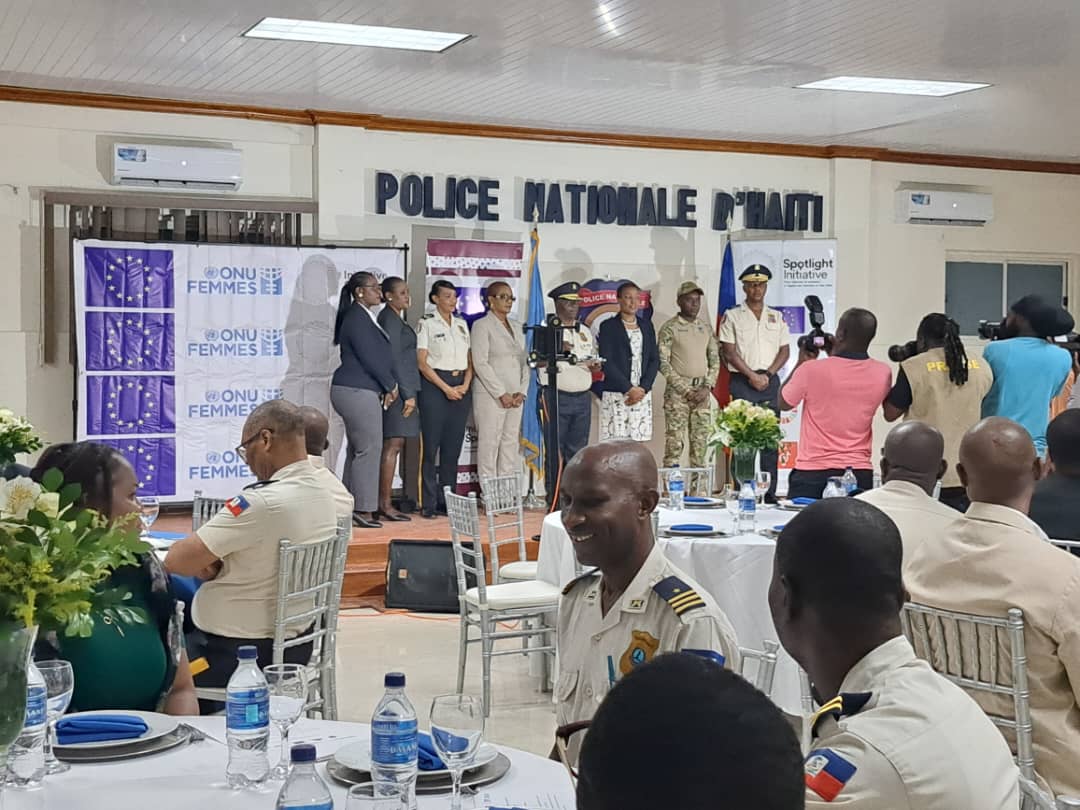
UN Women supports mobility efforts in Haiti to protect women and girls against gender-based violence
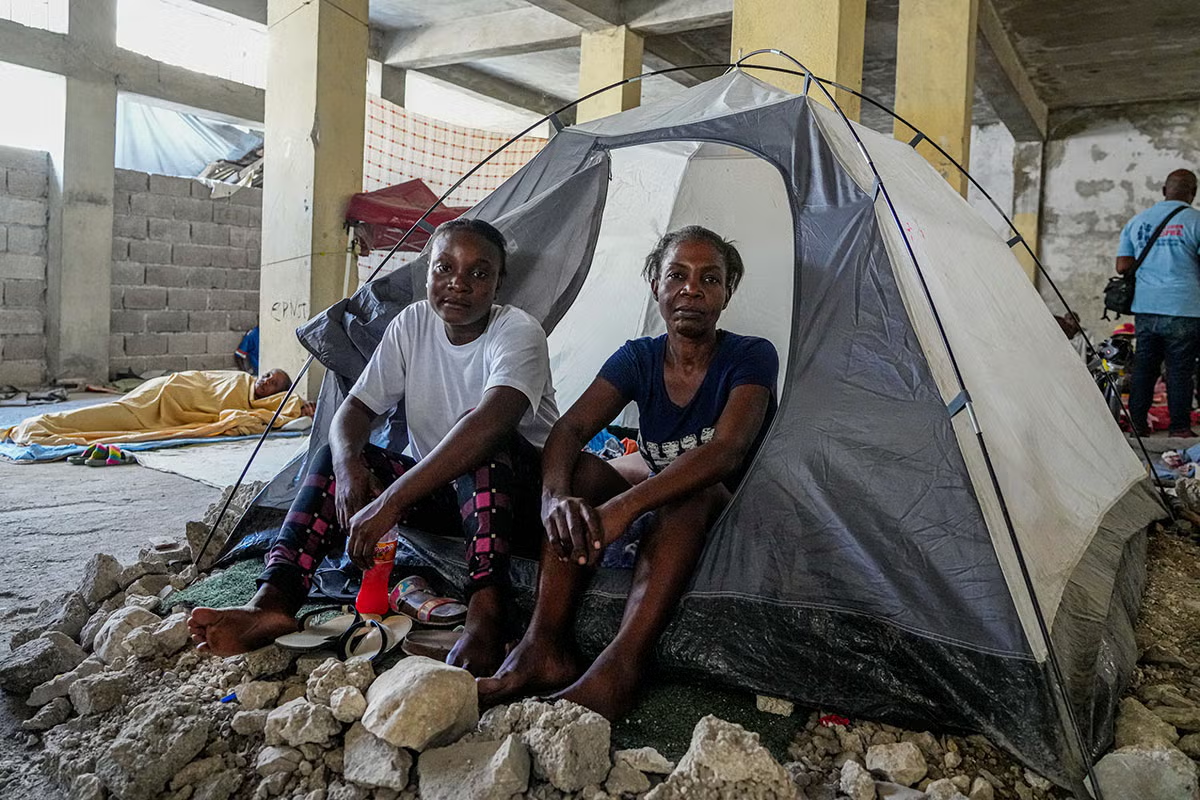
30 July 2024300,000 Haitian women and girls are displaced without basic safety and health services
17 July 2024