 Libya
Libya
Other resources (non-core)
Country Indexes
UN Women in action: Strategic insights and achievements
View annual report narratives for the year
Advancing SDGs: UN Women's impact and key achievements
In 2025, women meaningfully influenced Libya’s national political process, advancing inclusive governance in line with Sustainable Development Goals 5 and 16. Women accounted for 35 per cent of participants in the national political dialogue (43 of 120 members), and their engagement resulted in the institutionalization of a women-led consultative mechanism linked to the UN-facilitated process, ensuring sustained and structured input into national decision-making. UN Women played a central role in achieving this result, in close coordination with the United Nations Support Mission in Libya (UNSMIL), by sustaining the engagement of Libyan women leaders, women-led platforms, and leading the Libyan Women’s Caucus as part of the Structured Dialogue.During the reporting year, UN Women supported a series of structured political dialogues that enabled women to move beyond presence to play a substantive role in shaping the political process. This included two in-person national consultations in Tripoli and Benghazi, convened by UNSMIL with UN Women’s support, which brought together more than 40 women peacebuilders from civil society, youth groups, municipal councils, women’s coalitions, and organizations of women with disabilities, representing western, southern, and eastern Libya. An additional online consultation engaged women who had previously participated in the Libyan Political Dialogue Forum and the Libyan Political Agreement, focusing on lessons learned and practical approaches to strengthening women’s influence, inclusivity, and accountability in the current political process.Across these dialogues, women engaged directly with the Special Representative of the Secretary-General and senior UNSMIL leadership, developed shared and informed positions on political options emerging from the Advisory Committee, and advocated for a transitional framework grounded in national consensus, institutional reform, and meaningful participation of women, including young women and women with disabilities. Inputs from these consultations informed ongoing reporting and engagement with the UN Security Council, strengthening the integration of women’s priorities into senior-level political discussions.In parallel, UN Women, together with UNSMIL and in coordination with UNDP, supported the development of the Libyan Women’s Charter as a sustained dialogue and advocacy platform. Through five thematic briefings and national consultative workshops involving over 100 women from different regions and tracks of the peace process, women agreed on shared priorities across governance, security, the economy, human rights, reconciliation, and the ceasefire. Supported by the Governments of Germany and Finland, this result ensured more inclusive national decision-making that better reflects the needs and priorities of women and girls in Libya’s political process.- https://unsmil.unmissions.org/en/libyan-womens-caucus - https://minujusth.unmissions.org/en/unsmil/libyan-womens-caucus
Advancing SDGs: UN Women's impact and key achievements
In 2024, Libya experienced several groundbreaking milestones for women’s political empowerment, signifying a transformative shift in leadership and participation. For the first time, a woman was elected mayor in Zultin Municipality, and another secured a non-quota seat in local elections. UN Women Libya was instrumental in enabling key results for women’s political empowerment through strategic interventions, partnerships, and community engagement.
Female voter registration rates increased from 19% to 29% after the Libyan High National Election Commission (HNEC) implemented a policy adjustment to address barriers to women’s voter registration and women community leaders in targeted municipalities learned how to promote women’s registration (as well as gaining knowledge of municipal electoral processes, equipping them to better engage with women voters). To achieve these results, 60 women from civil society organizations (CSOs) across Libya engaged with HNEC to identify legislative gaps, advocate for legal reforms, and combat violence against women in politics. The engagement continued through follow-up meetings between the women and the HNEC, and together, they identified voter registration for women as an issue, which directly led to the policy change implemented by the HNEC. UN Women facilitated these meetings. UN Women also provided women community leaders training sessions through which they gained the knowledge required to support women’s voter registration.
In parallel, the 760 Network for Women Candidates drafted a strategic framework to sustain advocacy and empower women candidates. UN Women supported this result by providing training and consultations on electoral processes for the network. Additionally, policymakers and the public can now access actionable recommendations to strengthen women’s roles in governance through a groundbreaking study, “Women’s Political Participation in Libya: A Review of Electoral Legislation to Date”. UN Women conducted the study and amplified findings through a social media campaign, fostering public dialogue on inclusive political participation.
Through robust partnerships with HNEC, UNDP, UNSMIL, and civil society, UN Women has created an enabling environment for women to lead and participate in Libya’s political processes. These efforts directly contribute to SDG 5 (Gender Equality) and SDG 16 (Peace, Justice, and Strong Institutions), while aligning with the UNSDCF Priority 1: Governance and Peace. By 2025, these interventions aim to ensure that Libyan women and youth are better equipped to exercise their rights in an inclusive, democratic, and stable society supported by transparent and accountable institutions.
Female voter registration rates increased from 19% to 29% after the Libyan High National Election Commission (HNEC) implemented a policy adjustment to address barriers to women’s voter registration and women community leaders in targeted municipalities learned how to promote women’s registration (as well as gaining knowledge of municipal electoral processes, equipping them to better engage with women voters). To achieve these results, 60 women from civil society organizations (CSOs) across Libya engaged with HNEC to identify legislative gaps, advocate for legal reforms, and combat violence against women in politics. The engagement continued through follow-up meetings between the women and the HNEC, and together, they identified voter registration for women as an issue, which directly led to the policy change implemented by the HNEC. UN Women facilitated these meetings. UN Women also provided women community leaders training sessions through which they gained the knowledge required to support women’s voter registration.
In parallel, the 760 Network for Women Candidates drafted a strategic framework to sustain advocacy and empower women candidates. UN Women supported this result by providing training and consultations on electoral processes for the network. Additionally, policymakers and the public can now access actionable recommendations to strengthen women’s roles in governance through a groundbreaking study, “Women’s Political Participation in Libya: A Review of Electoral Legislation to Date”. UN Women conducted the study and amplified findings through a social media campaign, fostering public dialogue on inclusive political participation.
Through robust partnerships with HNEC, UNDP, UNSMIL, and civil society, UN Women has created an enabling environment for women to lead and participate in Libya’s political processes. These efforts directly contribute to SDG 5 (Gender Equality) and SDG 16 (Peace, Justice, and Strong Institutions), while aligning with the UNSDCF Priority 1: Governance and Peace. By 2025, these interventions aim to ensure that Libyan women and youth are better equipped to exercise their rights in an inclusive, democratic, and stable society supported by transparent and accountable institutions.
Advancing SDGs: UN Women's impact and key achievements
Significant progress was made towards the achievement of Outcome 1.2: By 2025, people in Libya participate in and benefit from a more peaceful, safe, and secure society, free from armed conflict and underpinned by unified and strengthened security, justice, rule of law, and human rights institutions that promote and protect human rights based on the principles of inclusivity, non-discrimination, and equality in accordance with international norms and standards. (UNSDCF Outcome 1.2 and SDG 16.3). Progress has been made as parliamentarians took steps to draft and adopt non-discriminatory legislation including to empower women (output 1.2.1) through enhanced understanding and support for the Ending Violence Against Women (EVAW) draft law by 13 House of Representatives (HoRs) members (11 women and 2 men). During a consultation meeting, a drafting committee handed over a developed draft of a law on EVAW to the HoRs members, marking a significant step towards addressing and preventing violence against women. Attendees to the consultation also signed final statement encompassing a set of action points. Foremost among these points is the commitment of HoRs members to actively advocate for the draft law within Parliament, with the goal of securing a vote in its favor. The EVAW law, once adopted, will address structural barriers to women’s freedom from violence by prohibiting VAW and providing a framework for prosecution. In addition, the draft law addresses the diversity of needs of different kinds of women through an intersectional approach by an inclusive definition of violence against women that encompasses various forms of violence, including physical, sexual, psychological, online, and economic abuse. This ensures that the diverse experiences and needs of women from different backgrounds are recognized and addressed by defining and addressing the forms of discrimination experienced by women based on factors such as race, ethnicity, religion, age, disability, socioeconomic status, and migration status.
To achieve this result, 13 members of HoRS participated in a two-day consultation meeting in Cairo on the 15th and 16th of November 2023, including 6 national expert members of the EVAW drafting committee. This meeting served as a critical juncture to enhance communication, fostering a private and open atmosphere to address concerns and establish a common understanding of the HoR position on the EVAW draft law. Collaborating with members of the HoRs, national experts worked collectively on developing a roadmap for adopting the draft law on EVAW and the draft law itself. UN Women contributed to this through the organization of the round table discussion in Cairo, playing a pivotal role in orchestrating insightful discussions throughout the two-day events. UNSMIL, UNDP and the Team of Experts on Rule of Law and Sexual Violence in Conflict also contributed to the organisation of the event.
To achieve this result, 13 members of HoRS participated in a two-day consultation meeting in Cairo on the 15th and 16th of November 2023, including 6 national expert members of the EVAW drafting committee. This meeting served as a critical juncture to enhance communication, fostering a private and open atmosphere to address concerns and establish a common understanding of the HoR position on the EVAW draft law. Collaborating with members of the HoRs, national experts worked collectively on developing a roadmap for adopting the draft law on EVAW and the draft law itself. UN Women contributed to this through the organization of the round table discussion in Cairo, playing a pivotal role in orchestrating insightful discussions throughout the two-day events. UNSMIL, UNDP and the Team of Experts on Rule of Law and Sexual Violence in Conflict also contributed to the organisation of the event.
Advancing SDGs: UN Women's impact and key achievements
Women and men in Libya as well as high-level representatives from national and international institutions have increased awareness of online violence against women (OVAW), a primary concern in Libya.
410 Libyans (373 women; 37 men) from nine (9) cities (Tripoli, Benghazi, Sabha, Misrata, Sirt, Marej, Tubruk, Kufra and Zintan) have increased understanding of OVAW. They include female staff from the police and the High National Elections Commission (HNEC), civil society representatives, and female teachers. Among them were women with disabilities, internally displaced persons (IDPs), and migrants. They expressed their interest to learn more about OVAW as per the pre-/post-tests from the 19 trainings in which they participated. These were offered by 14 women trainers (aged 18-51, including women with disabilities) from 10 regions. The 14 had participated in a five (5) day Training of Trainers (ToT) on OVAW provided by UN Women. According to the training report, they enhanced their knowledge about social media reporting, digital security, legal frameworks, services, knowledge dissemination, and training methods.
After attending one of the trainings, the head of the Women’s Affairs Office in the Ministry of Interior (MoI) requested UN Women to provide OVAW training for female police officers. Moreover, the United Nations Support Mission in Libya decided to focus its “16 Days of Activism Campaign” on OVAW. Its messages were based on consultations with women’s civil society representatives and referenced a UN Women multi-country study on OVAW. UN Women contributed by coordinating the participation of UNCT members and by highlighting the regional study and how to disseminate its content in the ToT. 29 representatives from civil society and national authorities also increased their understanding of OVAW in Libya and identified priorities for eliminating it through legal reform, advocacy and awareness-raising, and service provision. The participants included high-level representatives from HNEC, the General Authority for Monitoring Media Content, the Audio Space Authority, the Presidential Council, and the MoI. They participated in a consultation organised by UN Women with support of the Government of Finland, in which new data was presented in the form of a mapping generated through big data analytics, text mining, and artificial intelligence. The results of this consultation will be published with the finalised mapping. [SDG 5, targets 5.2, 5.5 and 5.B; UNSF Outcome 1]
410 Libyans (373 women; 37 men) from nine (9) cities (Tripoli, Benghazi, Sabha, Misrata, Sirt, Marej, Tubruk, Kufra and Zintan) have increased understanding of OVAW. They include female staff from the police and the High National Elections Commission (HNEC), civil society representatives, and female teachers. Among them were women with disabilities, internally displaced persons (IDPs), and migrants. They expressed their interest to learn more about OVAW as per the pre-/post-tests from the 19 trainings in which they participated. These were offered by 14 women trainers (aged 18-51, including women with disabilities) from 10 regions. The 14 had participated in a five (5) day Training of Trainers (ToT) on OVAW provided by UN Women. According to the training report, they enhanced their knowledge about social media reporting, digital security, legal frameworks, services, knowledge dissemination, and training methods.
After attending one of the trainings, the head of the Women’s Affairs Office in the Ministry of Interior (MoI) requested UN Women to provide OVAW training for female police officers. Moreover, the United Nations Support Mission in Libya decided to focus its “16 Days of Activism Campaign” on OVAW. Its messages were based on consultations with women’s civil society representatives and referenced a UN Women multi-country study on OVAW. UN Women contributed by coordinating the participation of UNCT members and by highlighting the regional study and how to disseminate its content in the ToT. 29 representatives from civil society and national authorities also increased their understanding of OVAW in Libya and identified priorities for eliminating it through legal reform, advocacy and awareness-raising, and service provision. The participants included high-level representatives from HNEC, the General Authority for Monitoring Media Content, the Audio Space Authority, the Presidential Council, and the MoI. They participated in a consultation organised by UN Women with support of the Government of Finland, in which new data was presented in the form of a mapping generated through big data analytics, text mining, and artificial intelligence. The results of this consultation will be published with the finalised mapping. [SDG 5, targets 5.2, 5.5 and 5.B; UNSF Outcome 1]
Results and resources
- Results overview
- Total resources
- Development results and resources
- Organizational results and resources
Budget
Expenses
Outcome
Result statement
IATI identifier
Budget
Expenses
Outcome
Result statement
IATI identifier
OutcomeLBY_O_1
Outcome result statementUN Women is an accountable and trustworthy development organization that manages its financial and other resources with integrity and in line with its programmatic ambitions and fiduciary obligations.
IATI identifierXM-DAC-41146-LBY_O_1
OutcomeLBY_O_2
Outcome result statementUN Women effectively leverages and expands its partnerships, communications and advocacy capabilities to increase support for and financing of the gender equality agenda, while securing sustainable resourcing for the delivery of its own mandate.
IATI identifierXM-DAC-41146-LBY_O_2
OutcomeLBY_O_3
Outcome result statementUN Women strategically plans for and transforms its business model to deliver impact at scale, through agile and ethical leadership rooted in a continuous improvement culture.
IATI identifierXM-DAC-41146-LBY_O_3
OutcomeLBY_O_4
Outcome result statementWith its unique and inclusive culture, UN-Women is an employer of choice with a diverse and highly performing cadre of personnel that embodies UN values.
IATI identifierXM-DAC-41146-LBY_O_4
OutcomeLBY_O_5
Outcome result statementUN Women efficiently and effectively discharges of all business processes that advance integrated delivery of its normative, operational and coordination mandate at HQ, Regional and Country level, including through shared services.
IATI identifierXM-DAC-41146-LBY_O_5
Resources allocated towards SDGs
View SDG data for
Our funding partners contributions
- Chart
- Table
Regular resources (core)
$0.00 in total
Lorem Ipsum is simply dummy text of the printing and typesetting industry.
Other resources (non-core)
$837.05 K in total
Other resources (non-core)
$837.05 K in total
Lorem Ipsum is simply dummy text of the printing and typesetting industry.
| 2022 | 2021 | |
|---|---|---|
| Finland | $388,193 2022
FinlandOECD-DAC donor
Total contribution:$388,193
Development:$388,193(100%)
Humanitarian:$0(0%)
|
$40,000 2021
FinlandOECD-DAC donor
Total contribution:$40,000
Development:$40,000(100%)
Humanitarian:$0(0%)
|
| Norway | $198,742 2022
NorwayOECD-DAC donor
Total contribution:$198,742
Development:$198,742(100%)
Humanitarian:$0(0%)
|
$158,965 2021
NorwayOECD-DAC donor
Total contribution:$158,965
Development:$158,965(100%)
Humanitarian:$0(0%)
|
| United Nations Multi-Partner Trust Fund Office | --
2022
No data available
|
$51,147 2021
United Nations Multi-Partner Trust Fund OfficeUnited Nations pooled fund
Total contribution:$51,147
Development:$51,147(100%)
Humanitarian:$0(0%)
|
2022
Finland$388,193
Total contribution$388,193
Development$388,193(100%)
Humanitarian$0(0%)
Norway$198,742
Total contribution$198,742
Development$198,742(100%)
Humanitarian$0(0%)
2021
Finland$40,000
Total contribution$40,000
Development$40,000(100%)
Humanitarian$0(0%)
Norway$158,965
Total contribution$158,965
Development$158,965(100%)
Humanitarian$0(0%)
United Nations Multi-Partner Trust Fund Office$51,147
Total contribution$51,147
Development$51,147(100%)
Humanitarian$0(0%)
Strategic plan contributions
- Impact areas
- Systemic outcomes
- Organizational output
Documents
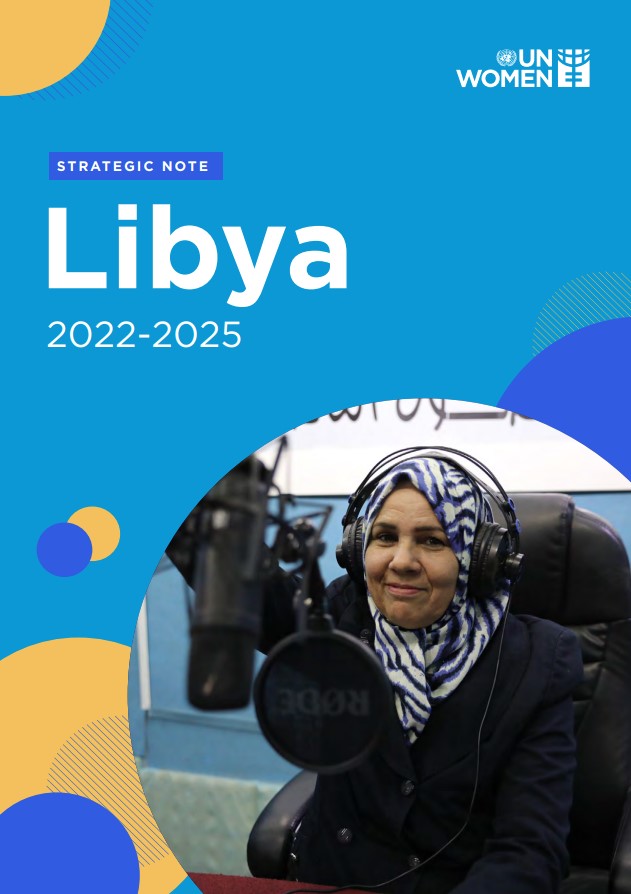
Libya: Strategic note 2022–2025 brochure
22 May 2025Results stories