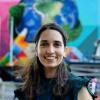
Iryna Dovgan, 63, founder of SEMA Ukraine, is a woman who turned her own experiences of war and captivity into a force to help others. Her story is a journey from deep trauma to creating a powerful community of support that today helps dozens of Ukrainian women and men who have suffered from conflict-related sexual violence (CRSV).
Iryna spoke about the path of the organization's formation, areas of work, and building a sisterhood to support victims as part of the "16 Days of Activism against Gender-Based Violence against Women and Girls" campaign.
Captivity changed me forever.
I am a native of Donbass, having lived there for 53 years. In 2014, I was arrested for my pro-Ukrainian stance — I experienced captivity, which completely changed my life. The person who is speaking to you now is completely different from the person I was before 2014.
How the organization "SEMA Ukraine" was founded
The idea for the organization came to me in 2018, when I was testifying at the International Criminal Court in The Hague and working with international human rights activists. That's when I learned about the Mukwege Foundation, which supports women survivors of violence and captivity. I was struck by how much attention the world was paying to this topic — and how little it was being talked about in Ukraine at the time. Before the full-scale Russian invasion, the topic of the SNPK was almost taboo in Ukraine. Even the military prosecutor, when I tried to testify, avoided talking about it. That's when I realized: we ourselves need to create a space where we can speak.
We started uniting women who had experienced similar things. In 2019, there were already 15 of us — and that's how SEMA Ukraine was born. We weren't formally registered yet, but thanks to the support of the Mukwege Foundation, we were able to meet, share experiences, and look for ways to be useful to the state.
First results: from taboo to testimony
In 2020, thanks to our initiative, the Prosecutor General's Office opened the first 11 criminal proceedings on the facts of the SNPK. Women began to speak out about their experiences and give testimonies. These were the first cases of conflict-related sexual violence in Ukraine.
When the full-scale invasion began, the number of victims probably increased a thousandfold. But we already had experience and could act quickly. We worked in the deoccupied territories, in particular in the Kyiv region. New participants joined us - among them Darya Zimenko and Halyna Tyshchenko.
Our main principle is equality. We do not divide those who were in captivity longer or who experienced more. Trauma has no dimensions. It can happen in one day or last for years. But every person has the right to support.
"Our main message is post-traumatic growth"
Initially, our activities were aimed only at support, because no one knew how to work with people who had survived SNPK. In 2019–2022, women were left alone with their trauma. Therefore, the community became a space of acceptance for them - when you see that others have gone through this path, you have faith that you too can live on. We always emphasize: you don't have to live in the status of a victim. You can recover - and even become stronger. This is post-traumatic growth.
Partnerships and development
Our first partner was the Mukwege Foundation, with the support of this foundation we learned from colleagues from Kosovo and Bosnia and Herzegovina. Later, we began to cooperate with Ukrainian organizations - the East Ukrainian Center for Public Initiatives, the Elios organization, which provides psychological and material assistance to victims.
Today, we are actively working with UN Women in Ukraine. Thanks to a grant from them, we held a strategic session where participants learned how to write grants and developed the organization's internal policies. This was a big step forward. We also cooperate with the organizations "Gidni" and "Divchata", and we hold joint sessions in the regions, in particular in Sumy.
Projects that change communities
We work not only with victims, but also with communities: we explain what SNPK is, why women under occupation are completely defenseless, and why they are not to blame for what happened.
This changes attitudes, increases empathy, and helps communities deal with collective trauma. We also provide information about legal aid and interim emergency reparations. This is a unique experience when SNPK victims receive reparations during an ongoing war. It is important that people receive the funds personally and spend them on something that restores dignity: some for treatment, some for a trip to the mountains, some to finally leave abusive relationships. These reparations give a sense of freedom. A person begins to feel human again.
On participation in legislative changes
Many of our participants are part of an interagency group that is developing regulations for the so-called Bardina law, which defines the status of survivors of sexual violence. We want this status to actually work. Previously, there was no status for such women in Ukraine at all — and it hurts when they don’t see you. Now everything has changed: survivors themselves are participating in the development of laws, and this is also an important part of recovery.
"Don't be silent - speak up"
Working in communities helps us find women who are affected and need support. After our meetings, they start talking: they write, they call, they ask how to testify. We don't always know how many of them reach law enforcement, but we can definitely see that the message "Don't be silent" is working.
When a woman hears that silence is evil and that only by telling her story can justice be brought closer, she starts to speak. Our activities are written about not only in Ukraine, but also around the world: The New York Times, Le Monde, Der Spiegel, Deutsche Welle are just some of the international media that have covered us.
But the most important thing is our community. When I myself got cancer, all our women supported me: they called, wrote, and waited for my return. And this gave me the strength to recover. Because when you have a goal, you live.
Today I know for sure: I want to continue this activity, because community and helping others are the meaning of my life.
The material was created for the campaign "16 Days of Activism against Gender-Based Violence against Women and Girls". The campaign is implemented within the framework of the UN inter-agency project "Joint Action to Strengthen the Capacities of Survivors of Sexual Violence in Conflict" with the support of the UN Action Network against Sexual Violence in Conflict (UN Action, www.stoprapenow.org) and with the financial support of the European Union and the Government of Sweden.
The opinions and judgments expressed in the interview are the personal opinions of the heroines and heroes and may not reflect the official position of the organizations supporting the campaign.